
I have this conversation all the time, with owners I already work with and with shops still kicking the tires. Somebody told them ranking #1 on Google is the whole game. So every dollar, every meeting, every “strategy” call ends up at the same question.
How do we get to the top?
I get it. I spent 20 years building on the web, then got into plumbing myself. I’m working toward my master plumber license now. I’ve sat on both sides of this, so I’ll tell you straight. The top spot on Google doesn’t make or break your shop.
SEO still matters. It’s just one piece.
Let’s get this out of the way. SEO is not dead. Ignore anybody who says it is.
It’s just not the whole puzzle anymore.
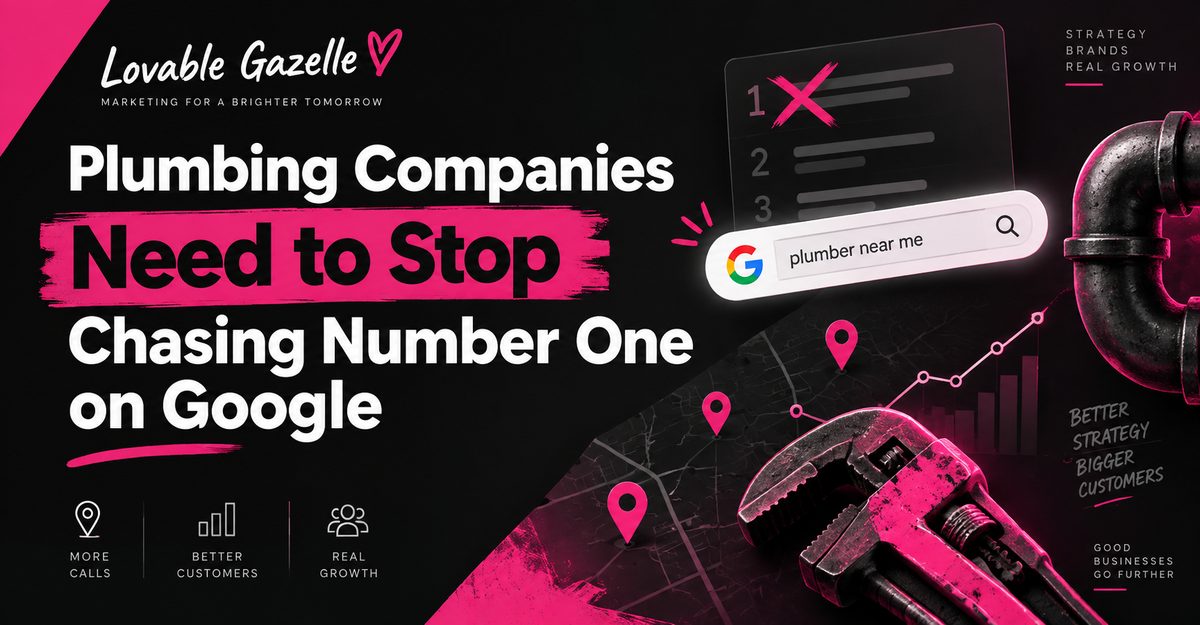
Pull up Google on your phone and search “plumber near me” in your own town. Count what shows up before the first regular result. Ads. Local Services Ads with the little badges. The map pack with three shops and their star ratings. Sometimes an AI answer sitting right on top. By the time anybody scrolls down to the old blue links, a homeowner with water on the floor has already called somebody.
So yes, plumbing SEO still earns its keep. Good SEO helps your site, your profile, and your name show up in more of those spots. But when somebody says “we’ll get you to #1,” that’s a sales pitch. Ask them what the actual plan is.
How people actually hire a plumber
This is the hard part. You have to separate how you think as a plumber and an owner from how real people actually buy.
You know the difference between a PRV and an expansion tank. Your customer doesn’t care. Your customer has a burst pipe in the laundry room and somebody yelling from downstairs.
They’re panicking. They’re not comparing ten websites or reading your blog about tankless water heaters. They grab the phone and do one of three things:
01
Ask an AI assistant who to call.
02
Open Google Maps and tap whoever has good reviews and looks close.
03
Search Google and call the first or second option that feels trustworthy.
Whoever looks legit and picks up the phone gets the job.
That’s really it. Look trustworthy and answer the phone. Ranking #1 doesn’t do much for you if your profile has twelve reviews from 2019, your hours are wrong, and the call rolls to a voicemail box that’s full.
Foundations first. Always.
Foundations aren’t sexy. Nobody brags about them on LinkedIn. But they stack up over time, and they’re what turns a search into a booked job.
Five of them matter most.
A website that works on a phone
When somebody’s panicking, they’re on their phone. Put click-to-call right at the top. Show your service area. List your services in plain English. Use real photos of your real trucks and your real crew. If a stressed out homeowner can’t figure out how to call you in five seconds, your site’s broken. Doesn’t matter where it ranks.
A Google Business Profile that tells the truth
Right name. Right phone number. Right hours. Right service area. Photos of your own work. Categories that match the work you want more of. For a lot of people, your profile is the only thing they see before they dial. Our Google Business Profile checklist for contractors walks through the whole thing.
Reviews you keep earning
Not a burst of fifty reviews and then nothing for a year. A steady habit. Ask after every good job. Reply to every one, good and bad. Reviews are how a stranger decides you’re safe to let in the house.
Tracking that doesn’t lie to you
This is the one most shops skip. If you don’t know where your calls come from, you’re guessing. Use call tracking numbers. Track your forms. Ask one simple question at booking: “How’d you hear about us?” You want to know which calls came from Maps, which came from the website, which came from the truck, and which of those turned into booked jobs. Clicks and impressions don’t pay you. Booked jobs do.
Systems behind the phone
Who answers? What happens after hours? Does a missed call get a text back? Does a quote get a follow up? You can get all the traffic in the world and still lose the job because nobody called back.
Pick a direction and stick to it
This is where a lot of shops burn money. They change direction every five minutes. New agency this quarter, new logo next quarter, new “strategy” every time a sales rep calls.
A brand only works if you stay with it long enough for people to recognize you. Same name, same colors, same look on the site, the profile, the trucks, the invoices, the shirts. The homeowner should see the same company everywhere they look.
Pick a direction, build it right, and give it time.
Small budget vs. big budget
Not everybody has the same money to work with, so your version of “brand” has to match where you are.
If you’re a small or new shop
Get the basics right early. It’s way cheaper now than later. A name people can remember and spell. A clean logo. Colors you’ll keep. A website that books. A complete Google Business Profile. A plan for how the phone gets answered. You don’t need a Fortune 500 rebrand. You need to be consistent and honest.
Put a magnet or a decal on the truck door if that’s what the budget allows. Totally fine. The full wrap can wait.
If you’re an established shop
Got a few trucks on the road and some years under your belt? Now we’re talking. Wrapping those trucks is one of the best brand moves you can make. They’re rolling billboards driving through your service area all day long. Add yard signs on job sites. Sponsor the local Little League team. Hang door hangers in the neighborhood where you just did three repipes.
That’s usually not day one money for a brand new shop. It’s for a shop that’s already survived a bad logo or two. Different stage, same idea. Show up where your customers already live.
Red flag: “#1 on Google for $X a month”
There are red flags everywhere in this industry. This one’s the biggest.
Somebody promises the world. Says all you have to do is sign here. Then bing, bang, boom, pay us this much a month and we’ll get you to number one.
Nine times out of ten, if not ten out of ten, walk away.
Nobody controls Google. Not you, not me, not the guy on the sales call. Anybody who guarantees a ranking is either guessing or counting on you not to check. And even if they do get you there for some keyword, ask what it’s worth. Ranking #1 for a phrase nobody in your town searches doesn’t pay the bills.
Before you sign with anybody, ask them this:
- What do I own if we part ways? The website, the domain, the Google Business Profile, the ad accounts?
- How do you measure booked jobs, not just traffic?
- What happens to my results when Google changes the page again?
- Who actually does the work, and how often do we talk?
If they squirm, you’ve got your answer. We keep a longer list of agency red flags if you want to go deeper.
Look for honest partners
The best partners are honest and up front. They plan with you instead of selling at you. They’ll tell you when something isn’t worth your money, even if it means they make less.
They might cost more at the start. Over the long haul, they’re usually cheaper than renting a fantasy ranking for a year and finding out you own nothing useful when you leave.
Every market is different
I’ve worked with plumbing companies all over the country, and every market is its own animal. Every town. Every state. Plumbing plays different than HVAC, and HVAC plays different than electrical. A shop in a fast growing suburb plays a different game than a shop in a small town where everybody knows everybody.
There are patterns, but there’s almost never a single formula. If there were, every shop would buy the same thing and everybody would be rich. We know that’s not how it works.
That’s why you need room to test. Try something, track it, keep what works, cut what doesn’t. You can’t do that if the whole budget is tied up chasing one ranking.
Offline and online work together
Old school marketing is back, and it works best paired with the digital stuff. Truck wraps. Yard signs. Neighborhood presence. Referrals from your best customers. Then online you’ve got reviews, a site that books, follow up that actually fires, and ads only when the path after the click is clean.
They feed each other. Somebody sees your truck three times this month. Then their water heater dies. They search your company name, not “plumber near me.” Your profile pops up with great reviews, your site loads fast, and somebody answers. That’s a booked job, and no ranking report on earth is going to give the truck the credit.
This is why tracking matters so much. Ask every caller how they found you. You might be surprised how often the answer is “I see your trucks everywhere.”
Do the takeoff before you buy the tools
Think about a material takeoff. Before you start a job, you go through the plans and list every fitting, every stick of pipe, every valve. You spend a few extra minutes making sure you’ve got the parts. You catch what’s missing at the supply house, not under the house with the water off.
Marketing works the same way. Plan the foundation before you buy the tools. Website. Google Business Profile. Reviews. Tracking. Follow up. A brand that looks like the same company everywhere a stressed homeowner looks. Get the list right. Then buy the ads. Then worry about rankings.
Skip the takeoff and you’re making three trips to the supply house. Skip the foundation and you’re paying for clicks that go nowhere.
What to do this week
You don’t need a big project to get started. Try these:
- List every place a call can come from. Maps. Website. Paid ads. Referrals. Lead services. The truck. Then be honest about which ones you can prove.
- Look at your shop like a customer would. Open your Google Business Profile and your homepage on your phone. Do the name, phone, hours, and services match? Would you call that company if your basement was flooding?
- Call your own shop after hours. What happens? If it’s a full voicemail box, fix that before you spend another dollar on SEO.
- Ask your agency the hard questions. What do you own? How do they measure booked jobs? What’s the plan when Google changes the page again?
Want a straight answer on your foundation?
If your foundation feels shaky and you want a clear plan before you pour more money into chasing rankings, start with the Website Foundation Audit ($799). You’ll get a plain list of what to fix first.
Not sure yet? Book a free 15 minute Fit Call. No pressure. Just a straight conversation about where your shop is and what makes sense next.
Related growth paths
SEO vs Google Ads for Plumbers
Decide where the next dollar goes once the foundation holds.
How Reviews Affect Contractor Calls From Google Maps
Why the map pack rewards review habits over rankings.
Why Contractor Websites Do Not Get Calls
Fix the site before you pay to send traffic to it.